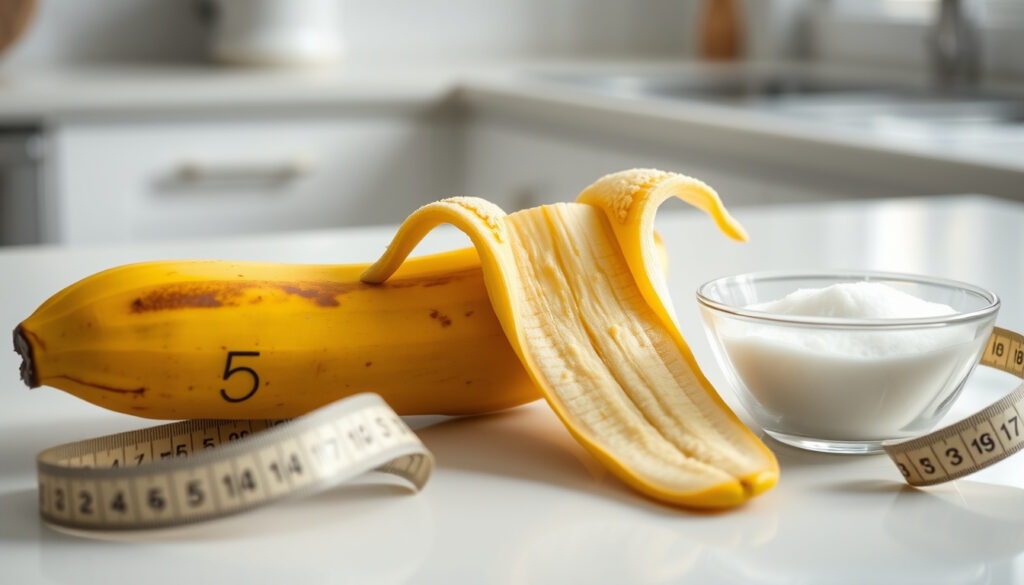
How Many Calories in a Banana? By Size, Sugar & Diet Tips
There’s a reason bananas are the most popular fruit in the U.S. — they’re convenient, affordable, and come in their own wrapper. But if you’re watching calories, you’ve probably wondered exactly what you’re getting with each peel. A medium banana packs about 105 calories, though that number shifts with size and ripeness. This guide breaks down banana calories by size, sugar content, and how they fit into a weight‑loss plan.
Small banana (6‑7 in / 101g): 90 calories · Medium banana (7‑8 in / 118g): 105 calories · Large banana (8‑9 in / 136g): 121 calories · Extra‑large (9+ in / 152g): 135 calories · Per 100g (peeled): 89 calories
Quick snapshot
- ~90 calories (Healthline (nutrition media))
- 23g carbs (Healthline (nutrition media))
- 12g sugar (Healthline (nutrition media))
- 2.5g fiber (Healthline (nutrition media))
- ~105 calories (Harvard T.H. Chan School of Public Health (academic nutrition source))
- 27g carbs (Harvard T.H. Chan School of Public Health (academic nutrition source))
- 15g sugar (Harvard T.H. Chan School of Public Health (academic nutrition source))
- 3g fiber (Harvard T.H. Chan School of Public Health (academic nutrition source))
- ~121 calories (Noom (weight‑loss platform))
- 31g carbs (Noom (weight‑loss platform))
- 17g sugar (Noom (weight‑loss platform))
- 3.5g fiber (Noom (weight‑loss platform))
- ~135 calories (Curelo (health information))
- 35g carbs (Curelo (health information))
- 19g sugar (Curelo (health information))
- 4g fiber (Curelo (health information))
Here are the key nutritional facts for a medium banana, sourced from academic and media references.
| Label | Value |
|---|---|
| Calories per 100g | 89 (FoodStruct (nutrition database)) |
| Calories, medium banana | 105 (Harvard T.H. Chan School of Public Health (academic nutrition source)) |
| Carbohydrates, medium banana | 27g (Healthline (nutrition media)) |
| Sugar, medium banana | 15g (Harvard T.H. Chan School of Public Health (academic nutrition source)) |
| Fiber, medium banana | 3g (Harvard T.H. Chan School of Public Health (academic nutrition source)) |
| Protein, medium banana | 1.3g (Star Health Insurance (health information)) |
How many calories are in 1 normal banana?
One medium banana — about 7 to 8 inches long and weighing 118 grams — contains roughly 105 calories, according to Healthline (nutrition media). That figure is the standard reference for a “normal” banana, but actual calorie content varies with length and weight.
How many calories in a large banana?
- Small (6–7 in, 101g): 90 calories (Healthline)
- Medium (7–8 in, 118g): 105 calories
- Large (8–9 in, 136g): 121 calories (Noom)
- Extra‑large (9+ in, 152g): 135 calories (Curelo)
How many calories in a banana per gram?
Peeled banana flesh averages 89 calories per 100 grams, as reported by FoodStruct (nutrition database). That means a 50‑gram half‑banana would provide roughly 45 calories.
How many protein in a banana?
A medium banana contains only about 1.3 grams of protein (Star Health Insurance). Bananas are not a significant protein source — you’d need to pair them with yogurt, nuts, or eggs for a balanced snack.
The implication: for weight management, use banana size as a quick calorie gauge.
Is 1 banana a day too much sugar?
A medium banana contains about 15 grams of naturally occurring sugar (Harvard T.H. Chan School of Public Health). That’s roughly a third of the American Heart Association’s recommended daily limit for added sugar — but banana sugar isn’t added; it comes packaged with fiber and micronutrients.
How much sugar is in a banana?
- Small banana: ~12g sugar
- Medium banana: ~15g sugar (Harvard T.H. Chan School of Public Health)
- Large banana: ~17g sugar
- Extra‑large: ~19g sugar
Is banana sugar bad for you?
The sugar in bananas is predominantly glucose, fructose, and sucrose (Star Health Insurance). Because it’s accompanied by 3 grams of fiber, the body absorbs it more slowly, reducing blood sugar spikes. Harvard T.H. Chan School of Public Health notes ripe bananas have a low glycemic index of 51, and slightly under‑ripe bananas score 42. The glycemic load — a more practical measure — is 13 for ripe and 11 for under‑ripe, both low.
The implication: for most adults, one banana a day is perfectly fine. People with diabetes may need to watch portion size, but the fiber and low GL make bananas a better choice than a candy bar or pastry.
The pattern: naturally occurring sugar with fiber does not pose the same risk as added sugar.
Are bananas good for dieting?
Bananas are nutrient‑dense and relatively low in calories — about 100‑110 per medium fruit. Harvard T.H. Chan School of Public Health states there is no evidence that bananas contribute to weight gain, despite popular belief. The fiber (3g) and resistant starch in less‑ripe bananas promote satiety.
Does banana burn tummy fat?
No food specifically “burns” belly fat. Weight loss ultimately depends on creating a calorie deficit. A banana can be a smart swap for a 400‑calorie muffin or a bag of chips, but eating bananas on top of a full diet won’t target abdominal fat.
What fruit is best for losing weight?
Berries, apples, and melons are lower in calories per gram than bananas — an apple has 52 calories per 100g versus 89 for bananas (FoodStruct). However, bananas are more filling for many people due to their creamy texture and resistant starch. The best fruit for weight loss is the one that keeps you satisfied and fits your calorie budget.
A medium banana (105 cal) can displace a 300‑calorie processed snack when you need energy. But if your goal is strict calorie reduction, lower‑calorie fruits like berries (57 cal per 100g) give you more volume for the same calories.
What this means: bananas are a strategic swap, not a free pass.
Which is better, boiled egg or banana?
Both are popular breakfast choices, but they serve very different nutritional roles. A boiled egg provides 78 calories with 6g of protein, while a medium banana offers 105 calories but only 1.3g protein (Healthline).
Six items, one pattern: calories per 100g, protein, carbs, fat, sugar, and fiber each tell a different story about which food fits your purpose.
| Metric (per medium serving) | Banana (118g, medium) | Boiled Egg (50g, large) |
|---|---|---|
| Calories | 105 | 78 |
| Protein | 1.3g | 6g |
| Carbohydrates | 27g | 0.6g |
| Total Sugar | 15g | 0.6g |
| Fiber | 3g | 0g |
| Fat | 0.4g | 5g |
Calorie comparison: boiled egg vs banana
The egg wins on calorie efficiency for protein (13 cal per gram of protein) versus the banana (81 cal per gram of protein). But the banana provides quick‑release carbohydrates that the egg lacks.
Protein comparison
Eggs are a complete protein source — 6g per egg. Bananas are negligible. If your goal is muscle repair after a workout, an egg is far superior.
Best choice for weight loss
For a pre‑workout energy boost, a banana’s carbs fuel performance. For a protein‑dense meal replacement, an egg is better. The choice depends on your next activity.
The catch: matching the right food to your activity matters more than any single nutrient.
Why do some doctors say not to eat bananas?
Certain physicians caution against bananas for specific populations: people with diabetes or insulin resistance, those with kidney disease, or anyone who consumes bananas alongside high‑fat, high‑sugar additions.
What not to mix with bananas?
Mixing bananas with ice cream (banana split), sugary syrups, or chocolate (banana‑chocolate smoothie) can turn a healthy fruit into a calorie‑dense dessert. For people with diabetes, pairing bananas with large amounts of fat (like peanut butter) may delay glucose absorption but can also increase calorie load significantly.
Are bananas bad for diabetics?
A medium banana’s glycemic load of 13 is low (Harvard T.H. Chan School of Public Health), meaning one banana won’t spike blood sugar the way a candy bar would. However, people with diabetes should account for the 27g of carbohydrates in their daily count. Choosing a smaller or under‑ripe banana (GL 11) can help.
For healthy individuals, the benefits — potassium (450 mg), vitamin B6, and vitamin C — far outweigh the moderate sugar content. The catch: if your diet already contains ample sugar from processed foods, one banana is rarely the problem; the added sugar in the rest of the diet matters more.
The pattern: dietary context determines whether a banana is beneficial or problematic.
Banana vs Apple: Which is more diet‑friendly?
The comparison table above already shows egg vs banana. Here we add apple for a fuller picture of how bananas stack up against another popular fruit.
Three fruits, one takeaway: bananas are the calorie‑dense option, but they offer the most potassium and fiber per serving.
| Per 100g | Banana | Apple |
|---|---|---|
| Calories | 89 | 52 (FoodStruct (nutrition database)) |
| Carbohydrates | 23g | 14g |
| Total Sugar | 12g | 10g |
| Fiber | 2.6g | 2.4g |
| Glycemic Index | 51 (ripe) | 38 (FoodStruct) |
The implication: if calories are your primary concern, apples offer more volume per calorie.
Specs at a glance: Complete banana nutrition profile
Here’s a consolidated nutritional snapshot for the most commonly eaten size — a medium banana (118g) — with sources for each number.
Nine metrics, one pattern: bananas are energy‑dense with minimal fat, moderate sugars, and a solid fiber + potassium package.
| Metric | Value |
|---|---|
| Calories, medium banana (118g) | 105 (Harvard T.H. Chan School of Public Health) |
| Calories per 100g (peeled) | 89 (FoodStruct) |
| Carbohydrates | 27g (Healthline) |
| Fiber | 3g (Harvard T.H. Chan School of Public Health) |
| Total Sugar | 15g (Harvard T.H. Chan School of Public Health) |
| Protein | 1.3g (Star Health Insurance) |
| Potassium | 450 mg (Harvard T.H. Chan School of Public Health) |
| Glycemic Index (ripe) | 51 (Harvard T.H. Chan School of Public Health) |
| Glycemic Load (ripe) | 13 (Harvard T.H. Chan School of Public Health) |
Upsides of bananas
- Nutrient‑dense: 105 calories deliver potassium, fiber, B6, and C.
- Convenient, no‑prep snack.
- Low glycemic load (13) for a fruit.
- May improve satiety and reduce cravings for processed sweets.
Downsides of bananas
- Higher in sugar and calories compared to apples or berries.
- Low protein content — not a standalone meal.
- Ripeness changes glycemic impact, which complicates diabetic meal planning.
- Some health professionals caution against overconsumption for certain conditions.
The pattern: bananas are a trade‑off between convenience and nutrient density.
What the evidence confirms — and what remains unclear
Confirmed facts
- Calorie counts for different banana sizes (peeled) are well established by Healthline and Harvard T.H. Chan School of Public Health.
- Nutrient composition (carbs, sugar, fiber, protein) is consistent across sources.
- Bananas provide potassium, vitamin B6, and vitamin C.
What’s unclear
- Whether bananas cause weight gain or weight loss depends entirely on total diet composition.
- Potential impact of banana ripeness on glycemic index is variable and person‑dependent.
- Some health professionals disagree on daily banana consumption for diabetics.
The catch: individual factors matter more than general rules.
Expert perspectives on bananas and health
Bananas are a healthy fruit, but portion size matters for those watching sugar intake.
— Harvard T.H. Chan School of Public Health, The Nutrition Source
Bananas are rich in fiber and antioxidants, making them a good choice for heart health.
— Healthline Nutrition Editor, Bananas: Calories, Carbs, and Health Benefits
The fiber and resistant starch in bananas can promote satiety and aid weight management.
— BODi, How Much Sugar Is in a Banana?
For the average reader trying to maintain a healthy weight, the evidence is clear: a banana a day fits comfortably into most calorie goals, especially when it replaces a processed snack. The key is to account for the 27g of carbs and 15g of sugar in your daily budget, and to choose smaller bananas if you’re eating multiple per day. If you have diabetes or kidney concerns, consult your doctor about your specific limits — but for the vast majority of people, bananas are a net positive.
For a more in-depth breakdown of how sugar content changes with ripeness, check out our detailed guide to banana calories.
Frequently asked questions
How many calories in a banana with peanut butter?
One medium banana (105 cal) plus 1 tablespoon of peanut butter (~95 cal) totals about 200 calories. The combination adds protein (4g) and healthy fat, making it a more balanced snack.
How many calories in 2 bananas?
Two medium bananas provide roughly 210 calories. Depending on size, the range is about 180–270 calories for two fruits.
What is the worst carb for belly fat?
Refined carbs like white bread, sugary drinks, and pastries are consistently linked to increased visceral fat. Bananas are a whole‑food carb and not associated with belly fat gain.
Are bananas fattening if eaten at night?
No. Total daily calorie intake matters more than timing. A banana at night (105 cal) is not fattening unless it pushes you over your energy needs.
Can I eat a banana every day?
Yes. For most people, one banana daily is healthy, providing potassium, fiber, and vitamins. People on low‑carb diets or with kidney disease may need to limit intake.
How does a banana compare to an apple in calories?
A medium apple (182g) has about 95 calories; a medium banana (118g) has about 105 calories. Per 100g, apples are lower (52 vs 89).
Is the sugar in bananas natural?
Yes. The sugar in bananas — glucose, fructose, and sucrose — occurs naturally and is packaged with fiber, which moderates blood‑sugar impact.
Do bananas help with muscle cramps?
Bananas are rich in potassium (450 mg per medium fruit), which may help prevent exercise‑related cramps. However, evidence is mixed; dehydration and electrolyte balance are also factors.
For anyone navigating the banana aisle wondering “how many calories in a banana,” the answer depends on size, ripeness, and what you pair it with. But the bigger picture is this: for the average person looking to eat healthier, a banana is a smart, satisfying choice — not a diet saboteur. If you’re pairing it with Pink Salt Trick for Weight Loss or incorporating bananas into a liver‑supportive diet like What Is the Best Liver Food? Top Foods for Repair & Detox, just account for the calories and enjoy the nutritional upside.
More related posts
 Gold Rate in Canada Today 22 Carat – Live CAD Prices and Trends
 Natalie Viscuso: Age, Job, Baby with Henry Cavill (2025)
 Ozzy Survivor: Full Bio, OnlyFans, Net Worth, Seasons
 Tarik Skubal: Nationality, Ethnicity, Injury & Fastest Pitches
 Best Sights in Rome: 7 Must-See Attractions & Mistakes
 Larry Fink: Net Worth, Power, and Global Influence
 Emily Osment: Miley Cyrus Feud, Marriage & Divorce
 Tom Sizemore: Cause of Death, Net Worth, Movies & Biography