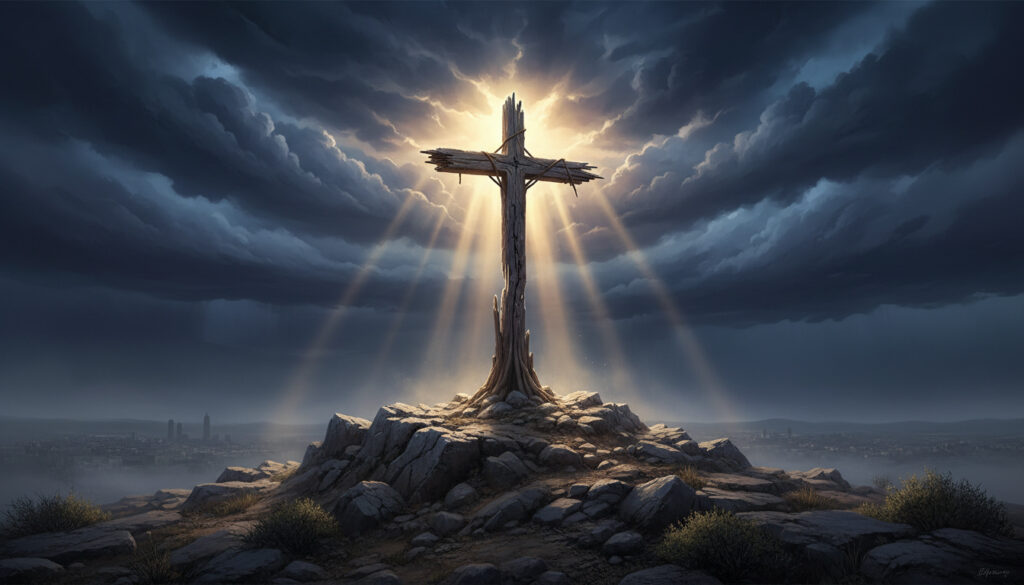
Jesus on the Cross – Timeline, Last Words and Facts
The crucifixion of Jesus of Nazareth represents one of the most documented executions of the ancient world, occurring on a Friday during Passover between AD 30 and 36. Roman and Jewish sources corroborate the biblical account that Jesus spent six hours nailed to a cross at Golgotha, a site outside Jerusalem known as the Place of the Skull, where he died under the authority of Prefect Pontius Pilate.
The event occupies a unique position at the intersection of history and theology. While the Gospels of Matthew, Mark, Luke, and John provide detailed narratives of the trials, crucifixion, and burial, non-Christian historians including Josephus and Tacitus independently confirm the execution occurred during Pilate’s governorship. The seven statements Jesus spoke during those six hours continue to serve as central texts for understanding Christian doctrine regarding atonement, forgiveness, and divine mission.
Scholars utilizing lunar calendar calculations and astronomical data have narrowed the probable dates to April 7, AD 30, or April 3, AD 33, with the latter potentially coinciding with a lunar eclipse visible in Jerusalem. Regardless of the precise chronology, the crucifixion occurred on Preparation Day, necessitating burial before sunset and the beginning of the Sabbath.
What Happened During Jesus’ Crucifixion?
Essential Facts of the Execution
The crucifixion followed a compressed sequence of legal proceedings beginning in the early morning hours. Jewish religious authorities had arrested Jesus during the previous night, conducting a trial before Caiaphas and the Sanhedrin that concluded with a charge of blasphemy. Because Jewish law restricted capital punishment authority under Roman occupation, the case transferred to the praetorium of Pontius Pilate, who interrogated Jesus regarding political threats to imperial authority.
- Prophecy Fulfillment: Multiple Old Testament passages including Psalm 22 and Isaiah 53 found explicit fulfillment in the events of the crucifixion day.
- Roman Method: The execution employed crucifixion, a torture technique reserved for non-citizens and the most serious crimes against the state.
- Passover Context: The timing coincided with Nisan 14, the day of Passover lamb sacrifice, creating theological parallels drawn by early Christian writers.
- Pre-Sabbath Burial: Jewish law required burial before sunset, necessitating rapid removal of bodies from crosses.
- Co-Crucified: Two criminals or robbers were executed simultaneously, one on each side of Jesus.
- Cosmic Darkness: The Gospels record supernatural darkness covering the land from noon until 3 PM.
- Tomb Placement: Joseph of Arimathea provided a new tomb for burial before nightfall.
| Aspect | Detail |
|---|---|
| Time on Cross | Six hours (Mark 15:25, ninth hour death) |
| Geographic Site | Golgotha (Aramaic: Place of the Skull) |
| Roman Authority | Pontius Pilate, Prefect of Judea |
| Jewish Leadership | Caiaphas, Annas, and the Sanhedrin |
| Additional Examination | Herod Antipas (per Luke’s Gospel) |
| Inscription on Cross | “Jesus of Nazareth, King of the Jews” (trilingual) |
| Astronomical Marker | Darkness noon–3 PM; possible eclipse AD 33 |
| Burial Method | Wrapped in linen, placed in sealed tomb |
| Roman Confirmation | Soldiers verified death before removal |
| Witnesses Present | Mary Magdalene, Mary (mother of James), John, other women |
Why Was Jesus Crucified?
The Charge of Sedition Against Rome
Roman authorities crucified Jesus on the specific charge of sedition, evidenced by the titulus—the sign placed above his head declaring him “King of the Jews.” This designation represented a direct challenge to imperial authority, as Caesar alone held kingship over Judea. Historical records confirm that Pontius Pilate served as prefect during the reign of Tiberius, possessing sole authority to order crucifixions within the province.
Religious Accusations and Jewish Legal Process
Before reaching Roman jurisdiction, Jesus faced examination by the Jewish Sanhedrin regarding claims of Messiahship and divine authority. These religious leaders accused him of blasphemy, a capital offense under Jewish law, though they lacked the legal power to execute capital punishment under Roman occupation. The Gospel of Luke uniquely records a brief interrogation by Herod Antipas, tetrarch of Galilee, who happened to be in Jerusalem during the Passover festival.
Crucifixion required Roman approval and served as a public deterrent against rebellion. The charge “King of the Jews” specifically addressed political threats rather than purely religious disputes, explaining why Pilate rather than the Sanhedrin pronounced the death sentence.
What Did Jesus Say on the Cross?
The four Gospels preserve seven distinct statements uttered by Jesus during the six hours of crucifixion. These sayings, traditionally called the Seven Last Words, reveal theological depth and personal care even amid extreme physical torture.
Words of Forgiveness and Promise
According to Luke’s account, Jesus first prayed for his executioners: “Father, forgive them, for they know not what they do.” This intercession occurred while soldiers divided his garments. Later, responding to the penitent thief who defended him against the other criminal’s mockery, Jesus promised: “Truly, I say to you, today you will be with me in paradise.”
Care for Family and Fulfillment of Scripture
John’s Gospel records the third saying as a family arrangement: “Woman, behold your son… Behold your mother,” entrusting Mary to the care of the disciple John. Around noon, as darkness covered the land, Mark and Matthew report Jesus quoting Psalm 22: “My God, my God, why have you forsaken me?” This cry expressed the weight of divine abandonment while simultaneously invoking a prophetic psalm that describes suffering followed by vindication.
Physical Suffering and Victorious Completion
The final three statements came in quick succession as death approached. John records “I thirst,” fulfilling Psalm 69:21, followed by the Greek declaration “Tetelestai” or “It is finished,” signifying the completion of his redemptive mission. Finally, Jesus quoted Psalm 31:5: “Father, into your hands I commit my spirit,” voluntarily yielding his life—a detail emphasizing that death occurred by his choice rather than by execution alone.
What Is the Significance of Jesus on the Cross?
The crucifixion functions as the central theological event in Christian doctrine, representing the mechanism of atonement between humanity and the divine. The seven last words demonstrate Jesus’ consistency of character, his authority to forgive sins, his fulfillment of Hebrew prophecy, and his voluntary sacrifice.
The inscription “King of the Jews” written in Hebrew, Latin, and Greek symbolized the unification of Jewish and Gentile audiences under Christ’s kingship. This trilingual declaration indicated that the message extended beyond ethnic Israel to encompass all nations.
Unlike typical crucifixion victims who succumbed to asphyxiation or shock over days, Jesus died after six hours by voluntarily releasing his spirit. This distinction underscores the theological claim that Jesus laid down his life with authority and chose the moment of death.
The Gospel of Mark records that a Roman centurion standing guard, upon witnessing the manner of death and the accompanying darkness, declared, “Truly this man was the Son of God.” This represents the first Gentile confession of Jesus’ divine identity in the narrative.
Timeline of the Crucifixion Day
The Gospels present a compressed chronology beginning with morning trials and concluding with sunset burial. All four accounts agree on the Friday Passover timing and the necessity of burial before Sabbath began at dusk.
- Morning (6:00–9:00 AM): Final trials before Pontius Pilate and Herod Antipas; scourging and sentencing; journey to Golgotha. Source: Wikipedia Chronology of Jesus
- Third Hour (9:00 AM): Nailed to the cross between two criminals; inscription placed above head. Source: Blue Letter Bible Commentary
- 9:00 AM–12:00 PM: First three sayings spoken: forgiveness for soldiers, promise to the repentant thief, and care for Mary. Source: Bible Project Guide
- Sixth Hour (12:00 PM): Supernatural darkness begins covering the land; lasts three hours. Source: Chronology Analysis
- Darkness Period (12:00–3:00 PM): Fourth saying quoting Psalm 22 regarding forsakenness. Source: Biblical Analysis
- Ninth Hour (3:00 PM): Final three sayings: “I thirst,” “It is finished,” and committal of spirit; death occurs before sunset. Source: Theological Study
- Late Afternoon: Joseph of Arimathea receives permission for burial; body removed and placed in tomb before nightfall. Source: Historical Timeline
What History Confirms and Questions That Remain
| Established Information | Uncertainties and Debates |
|---|---|
| Crucifixion occurred under Pontius Pilate between AD 30–36 | Precise date: April 7 AD 30 vs. April 3 AD 33 |
| Location at Golgotha outside Jerusalem walls | Exact modern location of Golgotha site |
| Friday execution before Jewish Sabbath | Reconciling John’s Nisan 14 with Synoptic chronology |
| Six-hour duration (9 AM to 3 PM) | Specific medical cause of death |
| Seven last words recorded across four Gospels | Whether astronomical darkness was eclipse or literary motif |
| Corroboration by Josephus and Tacitus | Extent of Josephus’ Christian interpolation in extant manuscripts |
| Burial in tomb of Joseph of Arimathea | Archaeological confirmation of the specific tomb |
Roman and Jewish Context of First-Century Execution
Crucifixion served as Rome’s most severe penalty, reserved for slaves, rebels, and non-citizens. The method involved nailing or tying victims to a wooden cross, causing death through a combination of shock, blood loss, and asphyxiation as the victim struggled to breathe while hanging. Roman practice typically allowed bodies to remain exposed for days, but Jewish law required burial before sunset, creating the urgency described in the Gospel accounts.
The political atmosphere of first-century Judea was volatile, with Messianic expectations running high during Passover—the celebration of Israel’s liberation from Egypt. Rome increased military presence during festivals to prevent insurrection. Jesus’ entry into Jerusalem days earlier had drawn crowds proclaiming him as the anticipated Davidic king, creating tension with authorities who feared Roman reprisals against the city. Researching historical investment strategies requires similar attention to contextual detail as found in How to Invest in Stocks – Beginner’s Step-by-Step Guide, where understanding the full environment proves essential for accurate interpretation.
Primary Sources and Historical Testimony
The crucifixion narrative relies primarily on the four canonical Gospels, written between approximately AD 60–90. These accounts, while varying in detail and theological emphasis, agree on the core facts: Roman involvement, the six-hour duration, the seven last sayings, and the pre-Sabbath burial.
“My God, my God, why have you forsaken me?”
— Mark 15:34, quoting Psalm 22:1
“It is finished.”
— John 19:30
Non-Christian sources provide crucial external validation. The Jewish historian Josephus, writing in the late first century, mentions the execution under Pilate in his Antiquities. Roman historian Tacitus, writing around AD 116, records that “Christus… suffered the extreme penalty during the reign of Tiberius at the hands of one of our procurators, Pontius Pilatus.” No contemporary sources deny the crucifixion occurred, though they differ on interpretation of the event’s meaning.
The Lasting Impact of the Crucifixion
The crucifixion of Jesus remains a historically attested execution that shaped Western civilization, establishing the framework for Christian theology regarding sacrifice, redemption, and divine love. The event’s documentation across multiple independent sources, combined with the rapid emergence of the resurrection proclamation in Jerusalem—the very city where the execution occurred—presents a historical conundrum that scholars continue to examine. Maintaining physical discipline in studying such weighty historical topics offers benefits similar to those described in Dumbbell Bent Over Row – Proper Form, Muscles and Benefits, where proper technique yields lasting results.
Frequently Asked Questions
Did Jesus carry the full cross to Golgotha?
The Gospels indicate Jesus initially carried his cross, but Roman soldiers compelled Simon of Cyrene to carry it part of the way when Jesus became too weak from scourging.
What caused Jesus’ death on the cross?
Medical experts suggest a combination of hypovolemic shock, asphyxiation, and cardiac rupture, though the Gospels emphasize Jesus voluntarily yielded his spirit after declaring “It is finished.”
Are there non-biblical accounts of the crucifixion?
Yes. First-century historian Josephus and second-century Roman historian Tacitus both record Jesus’ execution under Pontius Pilate. No contemporary sources deny the event occurred.
Why do the Gospels differ on the crucifixion timing?
John uses a different calendar system (Nisan 14) compared to the Synoptics, though all agree on Friday Passover timing. Scholars reconcile this through festival calendar variations practiced in first-century Judaism.
What happened to the two criminals crucified alongside Jesus?
One criminal mocked Jesus, while the other defended him and requested remembrance. Jesus promised the penitent thief immediate paradise, offering the only recorded promise of salvation during the crucifixion.
How do we know Jesus was dead before removal from the cross?
Roman executioners verified death before permitting burial. The Gospel of John records a soldier pierced Jesus’ side with a spear, producing blood and water, confirming death had occurred.
Where is Golgotha located today?
The traditional site lies within the Church of the Holy Sepulchre in Jerusalem. An alternative location, Gordon’s Calvary, features a skull-shaped hill but lacks early historical attestation.
More related posts
 Bettina Anderson: Career, Net Worth, Marriage to Donald Trump Jr.
 330 USD to CAD – Live Rate and Best Conversion Tips
 Always Be My Maybe: Review, Cast & Keanu Reeves Cameo Facts
 Sheryl Crow: Relationships, Health, Activism & Career
 Quebec Forest Fires 2025: Current Status, Maps, Restrictions
 Eric Bana: Ethnicity, Career, Family, and Languages Spoken
 Inter Miami Matches Today & 2026 Schedule – Live Scores & Results
 Middle Aged Definition: What Age Is Considered Middle-Aged