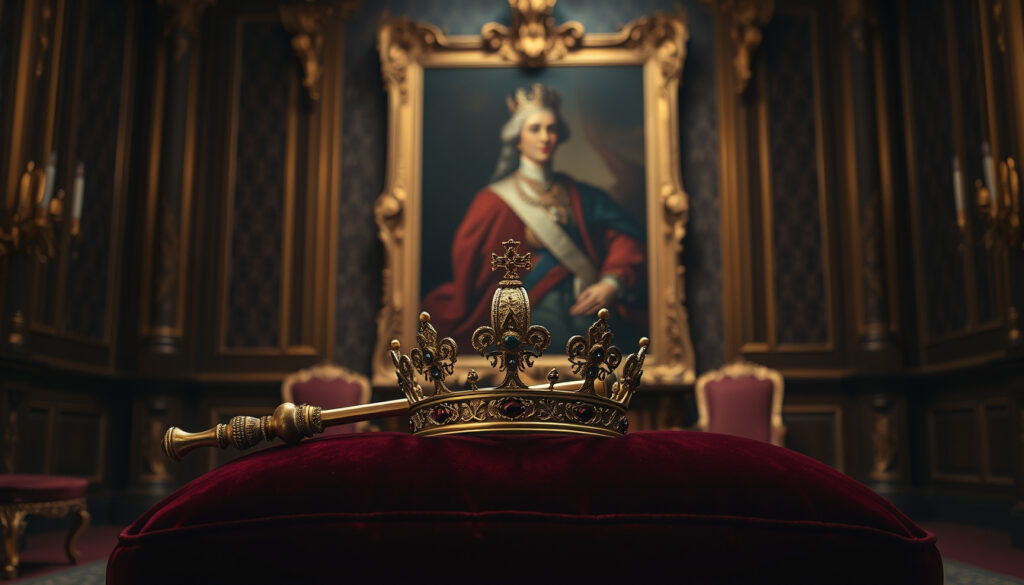
Queen Elizabeth II: Biography, Facts, and Answers to Top Questions
The woman behind the crown—her real name, her true love, or her last words—remains partly unknown despite her 70-year reign. This guide pulls together verified facts from official records and trusted sources to answer the questions people search for most.
Reign length: 70 years 214 days (longest of any British monarch) ·
Birth date: 21 April 1926 ·
Death date: 8 September 2022 ·
Coronation date: 2 June 1953 ·
Number of children: 4 ·
Number of great-grandchildren: 13
Quick snapshot
- Full name: Elizabeth Alexandra Mary Windsor (Britannica, a leading encyclopedic reference)
- Born 21 April 1926 in London (The Royal Family, official monarchy website)
- Died 8 September 2022 at Balmoral Castle (Britannica)
- Married Prince Philip on 20 November 1947 (The Royal Family)
- Queen’s exact last words are not publicly confirmed (Britannica)
- Whether she cut her own hair as a child is an unverified anecdote (Britannica)
- Whether she cried privately at Prince Philip’s death is not officially recorded (Britannica)
- Accession: 6 February 1952 (The Royal Family)
- Coronation: 2 June 1953 (National Geographic Kids, a children’s educational site)
- Death: 8 September 2022 (Britannica)
- Royal Archives processing records of Elizabeth II and Prince Philip (The Royal Archives, official repository)
- King Charles III succession continues under new reign (The Royal Archives, official repository)
Seven key facts capture the essentials of Elizabeth II’s life at a glance.
| Category | Detail |
|---|---|
| Full name | Elizabeth Alexandra Mary Windsor |
| Born | 21 April 1926, 17 Bruton Street, London |
| Died | 8 September 2022, Balmoral Castle, Scotland |
| Reign | 6 February 1952 – 8 September 2022 |
| Coronation | 2 June 1953 |
| Spouse | Prince Philip, Duke of Edinburgh |
| Children | Charles, Anne, Andrew, Edward |
What was the Queen’s real name?
Elizabeth Alexandra Mary Windsor was the full birth name of the woman the world knew as Queen Elizabeth II. She was born at 2:40 a.m. on 21 April 1926 at 17 Bruton Street in London, the first child of the Duke and Duchess of York (National Geographic Kids). Her father later became King George VI, making her heir presumptive after his accession in 1936.
Why is she known as Queen Elizabeth II?
The numeral II distinguishes her from Queen Elizabeth I (1533–1603), though there was never a Queen Elizabeth I of the United Kingdom as a political entity—the numbering continues the English monarchy tradition. She automatically became queen upon her father’s death on 6 February 1952 and was crowned at Westminster Abbey on 2 June 1953 (The Royal Family).
Elizabeth’s birth name was a triple-family homage—Elizabeth after her mother, Alexandra after her great-grandmother Queen Alexandra, and Mary after her grandmother Queen Mary. The “Windsor” surname dates to the royal family’s name change in 1917.
The pattern: her name reflects family heritage and historical continuity.
What were Queen Elizabeth’s last words?
No official source has ever confirmed the Queen’s last words. The palace’s public statement read: “The Queen died peacefully at Balmoral this afternoon” (The Royal Family). Her death certificate, issued by the National Records of Scotland, listed the primary cause of death as simply “old age” (National Records of Scotland, government archives).
What did Queen Elizabeth the first say before she died?
This is a frequently confused query. Queen Elizabeth I’s reputed last words—”All my possessions for a moment of time”—are also unverifiable. Neither Elizabeth I nor Elizabeth II left a recorded final utterance that historians treat as definitive.
The lack of a confirmed last statement is itself a statement: the monarchy’s private transitions remain private. For a reign that spanned 70 years, the final moments belong to the family, not the public record.
The implication: the silence preserves the monarchy’s boundary between public duty and private life.
Who was Elizabeth’s true love?
By any measure, Prince Philip, Duke of Edinburgh, was the central romantic relationship of Elizabeth’s life. She first met him in 1939 when she was 13, and after a wartime correspondence they became engaged in 1946 and married on 20 November 1947 at Westminster Abbey (Britannica).
How did Elizabeth and Philip meet?
The meeting occurred during a royal visit to the Royal Naval College at Dartmouth. Philip, then an 18-year-old cadet and a prince of Greece and Denmark, was asked to entertain the two princesses. Elizabeth later told friends she fell in love with him that day.
How long were they married?
Elizabeth and Philip were married for 73 years until Philip’s death on 9 April 2021 at age 99. She described him as “my strength and stay” throughout their marriage (The Royal Family).
The implication: for a woman defined by duty, Philip was the one constant personal choice she made and defended against palace tradition.
Did Queen Elizabeth support LGBTQ?
Queen Elizabeth II never made a public statement on LGBTQ rights. The British monarch is bound by constitutional convention to remain politically neutral—the Royal Prerogative prevents the sovereign from commenting on legislation or social policy (The Royal Family).
What was the royal stance on LGBTQ rights?
During her reign, same-sex marriage was legalized in the UK (2014 in England, Scotland, and Wales), but the Queen gave Royal Assent as a procedural matter without public comment. The monarchy’s institutional position is one of official neutrality.
Which royal figures have supported LGBTQ causes?
Prince William and Kate Middleton have shown explicit public support for the LGBTQ community, including visiting LGBTQ charities and appearing on magazine covers highlighting diversity. Princess Anne and Prince Harry have also made supportive statements.
The absence of a statement from Elizabeth II is often misread as disapproval, but constitutional neutrality—not personal opinion—governed her silence. For those seeking a clear royal stance, the younger generation has provided the answer.
What this means: Elizabeth II’s silence on LGBTQ rights reflects constitutional constraints, not personal views.
What will Kate be called if William becomes king?
Catherine, currently the Duchess of Cambridge, will become Queen Consort when Prince William ascends the throne. Her formal title will be “Queen Catherine,” following the tradition of queens consort taking their husband’s regnal name in feminine form (Britannica).
How do you say ‘hi’ in a royal way?
There is no official royal greeting. Protocol suggests addressing the monarch as “Your Majesty” on first introduction, then “Ma’am” (rhyming with “jam”). For other senior royals, “Your Royal Highness” then “Sir” or “Ma’am.” A simple “Hello” is not forbidden but considered informal.
What is the royal bedtime rule?
A well-circulated anecdote claims royal children are put to bed at 6 p.m. regardless of events. Neither the palace nor any royal biography has confirmed this as a standing rule. It likely originates from a remark by a former royal nanny.
The trade-off: public curiosity about royal titles and etiquette is insatiable, but the palace provides only the thinnest formal guidance. Most “rules” are media inventions with a kernel of tradition.
Timeline of a historic reign
- 21 April 1926 – Born Elizabeth Alexandra Mary Windsor (Britannica)
- 11 December 1936 – Became heir presumptive after uncle Edward VIII abdicated (The Royal Family)
- 6 February 1952 – Became Queen upon death of father George VI (Britannica)
- 2 June 1953 – Coronation at Westminster Abbey (National Geographic Kids)
- 9 April 2021 – Prince Philip died (The Royal Family)
- 6 February 2022 – 70th anniversary of accession (Platinum Jubilee) (Britannica)
- 8 September 2022 – Died at Balmoral Castle (Britannica)
The timeline shows a reign that spanned decades of change, with milestones that defined a generation.
What we know for sure vs. what remains unclear
Confirmed facts
- Full name is Elizabeth Alexandra Mary Windsor (Britannica)
- She died at 15:10 BST on 8 September 2022
- She married Prince Philip on 20 November 1947 (The Royal Family)
- She had four children: Charles, Anne, Andrew, Edward
What’s unclear
- Her exact last words are not publicly known
- Whether Elizabeth cut her own hair is an unverified anecdote
- Whether she cried privately at Philip’s death is not officially recorded
- Queen Elizabeth II’s personal views on LGBTQ are not publicly known
The contrast confirms that the monarchy preserves a private sphere even in the face of public curiosity.
Voices from the reign
“The Queen died peacefully at Balmoral this afternoon.”
— Official statement from Buckingham Palace, 8 September 2022 (The Royal Family)
“I present unto you your Queen, the undoubted Queen of this Realm.”
— Archbishop of Canterbury at the Coronation of Queen Elizabeth II, 2 June 1953 (The Royal Family)
“I cannot lead you into battle, I do not give you laws or administer justice, but I can do something else—I can give you my heart and my devotion to these old islands and to all the peoples of our brotherhood of nations.”
— Queen Elizabeth II, Christmas broadcast 1957 (Britannica)
For the millions who grew up knowing only one monarch, Elizabeth II’s death ended an era of stability. The practical consequence for the United Kingdom and the Commonwealth is a transition that had been planned for decades but whose emotional weight still reshapes national identity. For historians, the opening of the Royal Archives will provide the definitive record—but the question of who Elizabeth really was will always carry a personal dimension that official documents cannot answer.
en.wikipedia.org, britishheritage.com, britannica.com, royalcentral.co.uk, youtube.com, youtube.com, kids.britannica.com, loc.gov
For a more detailed account of her life and passing, see this detailed biography and cause of death article.
Frequently asked questions
What was Queen Elizabeth’s cause of death?
Her death certificate listed “old age” as the primary cause. The official announcement said she “died peacefully” at Balmoral Castle on 8 September 2022. (National Records of Scotland, government archives)
How old was Queen Elizabeth when she died?
She was 96 years old at the time of her death. (Britannica)
Who succeeded Queen Elizabeth as monarch?
Her eldest son, Charles, became King Charles III immediately upon her death. He was formally proclaimed monarch on 10 September 2022. (The Royal Family)
Where is Queen Elizabeth buried?
She was interred at the King George VI Memorial Chapel in St George’s Chapel, Windsor Castle, alongside Prince Philip and her parents. (The Royal Family, official monarchy website)
What was the Queen’s favorite dog breed?
She was famously associated with the Pembroke Welsh Corgi, owning more than 30 during her lifetime. Her first corgi, Dookie, was a gift from her father in 1933. (National Geographic Kids)
How many prime ministers served under Queen Elizabeth?
Fifteen prime ministers served during her reign, from Winston Churchill to Liz Truss. (Britannica)
Did Queen Elizabeth have a nickname?
Within the family she was called “Lilibet,” a name she gave herself as a child when she couldn’t pronounce Elizabeth. Her husband Philip called her “Lilibet” privately. (The Royal Family)
The FAQ answers reveal that many common questions have straightforward answers from official records, while others remain private.
Related reading
- Queen Elizabeth II’s life and reign – The Royal Family (official monarchy website)
- Elizabeth II biography – Britannica (leading encyclopedic reference)
More related posts
 Wil Wheaton: Star Trek Departure, Net Worth, Friendships
 Niall Horan: Health, Relationships, and Tattoo Facts
 Andy Byron Astronomer: CEO Resignation After Coldplay
 Jaiden Animations: Diagnosis, Net Worth & Privacy
 Houses for Sale Near Me – Raleigh Listings and Prices
 Disha Patani: Biography, Height, Net Worth, Relationships & Facts
 Kacey Musgraves: Sobriety, LGBTQ Views & Surgery Rumors
 iOS 26 Public Beta: How to Install, Features, Risks