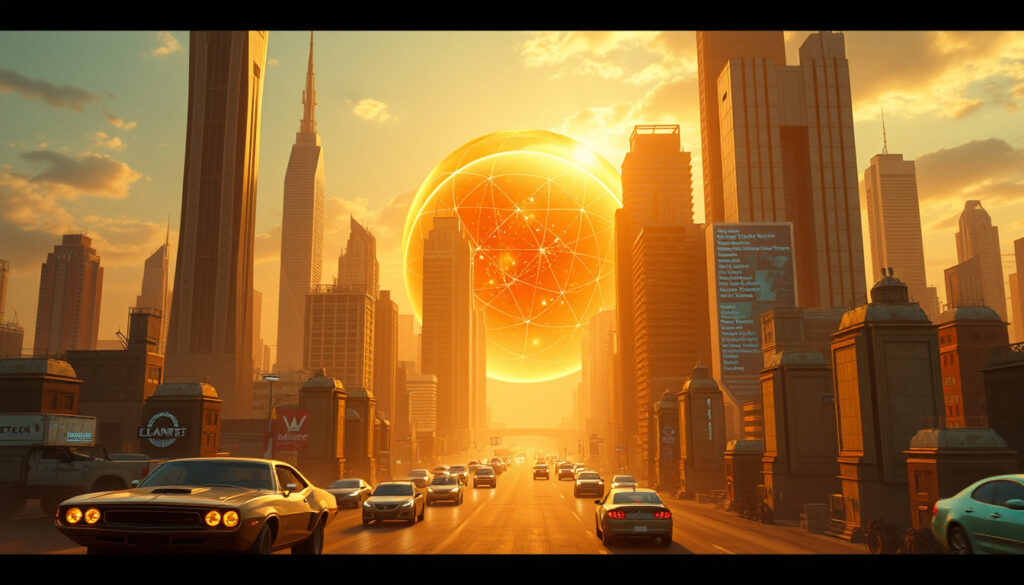
Luc Besson: French Filmmaker Behind The Fifth Element
Few French filmmakers have turned a personal vision into a global action-movie machine. Luc Besson did exactly that—first with stylish French-language thrillers, then with English-language blockbusters that redefined the genre.
Born: 18 March 1959 (Paris, France) · Known for: Action-thriller films, high-concept sci-fi · Notable film: The Fifth Element (1997) · Career span: 1981–present · Awards: César Award, BAFTA nomination
Quick snapshot
- Born in Paris on 18 March 1959 (Luc Besson Official Website (primary source))
- Directed The Fifth Element (1997) (Wikipedia (user-edited encyclopedia))
- Co‑founded EuropaCorp in 2000 (Wikipedia)
- Exact net worth not independently verified
- Current status of Dracula adaptation unconfirmed
- Some early life details hard to verify
- 1959: Born in Paris
- 1997: The Fifth Element release
- 2023: DogMan release
- Unconfirmed Dracula adaptation
- Further EuropaCorp projects
Seven biographical facts about Luc Besson reveal a director who built his career from independent roots to a multinational studio.
| Field | Value |
|---|---|
| Full name | Luc Paul Maurice Besson |
| Date of birth | 18 March 1959 |
| Place of birth | Paris, France |
| Occupation | Film director, screenwriter, producer |
| Notable works | The Fifth Element, Léon: The Professional, La Femme Nikita |
| Spouse | Virginie Besson-Silla (m. 2004) |
| Children | 5 |
What is Luc Besson most famous for?
Besson’s reputation rests on two pillars: his early French auteur work and his later role as a factory‑style producer of global action hits. The tension between the two defines his career.
Luc Besson’s signature films
- La Femme Nikita (1990) – a sleek, violent thriller that introduced his kinetic style (Festival de Cannes (official festival biography))
- Léon: The Professional (1994) – a César‑nominated hit that became a cult classic (Wikipedia)
- The Fifth Element (1997) – his biggest commercial and critical success (Wikipedia)
The Fifth Element and its cultural impact
Besson’s 1997 sci‑fi epic combined comic‑book colour, operatic action, and a cult following that has only grown. Its $90 million budget and $263.9 million gross made it one of the year’s top earners, but its true legacy is visual: the futuristic design and Milla Jovovich’s performance have inspired countless homages.
What science fiction film did Luc Besson direct in 1997?
Many remember the film’s flamboyant style, but its production was a financial gamble. Besson funded the $90 million budget through a complex pre‑sales deal that nearly fell apart.
Plot summary of The Fifth Element
In the 23rd century, a cab driver (Bruce Willis) helps a mysterious woman (Milla Jovovich) save Earth from an ancient evil. The story, which Besson wrote as a teenager, blends fantasy, comedy, and operatic violence.
Cast and production notes
- Starring: Bruce Willis, Milla Jovovich, Gary Oldman (Wikipedia)
- Director: Luc Besson
- Budget: $90 million; gross: $263.9 million (Wikipedia)
Box office and legacy
The film earned a César Award for Best Director and has been named one of the greatest sci‑fi films by the BBC and other outlets. Its visual style—especially the air‑borne car chase and the Diva dance—remains instantly recognisable.
Budget: $90 million · Box office: $263.9 million · César wins: 3
The pattern: Besson took a huge risk on an original script in the CGI era and won. That gamble became the blueprint for his entire EuropaCorp approach.
Who is Luc Besson?
Understanding Besson’s background explains why he built a studio that could compete with Hollywood while staying anchored in French talent.
Early life and career beginnings
Born in Paris on 18 March 1959 to scuba‑diving instructors, Besson spent much of his youth underwater. He entered cinema at 17 as a second assistant on short films and later worked on productions such as Moonraker (Festival de Cannes (official festival biography)). His first short, L’Avant Dernier, was shown at the Festival du Film Fantastique d’Avoriaz, and his feature debut Le Dernier Combat (1983) earned cult attention.
EuropaCorp founding
After founding Les Films du Dauphin, Besson co‑founded EuropaCorp with Pierre‑Ange Le Pogam in 2000, aiming to create a European major that could produce big‑budget English‑language films while keeping French crews (Ovid (academic journal abstract)). The company went public in 2006 to finance its own studios at Cité du Cinéma.
Notable films and style
- Subway (1985) – his second feature, produced after he founded his first company (Luc Besson Official Website (primary source))
- The Big Blue (1988) – a personal underwater drama
- Lucy (2014) – a sci‑fi thriller that grossed over $460 million (Variety (entertainment trade publication))
- Valerian and the City of a Thousand Planets (2017) – an ambitious adaptation (Wikipedia)
What this means: Besson’s filmography is split between personal projects and commercial franchises, and he has admitted that EuropaCorp shifted his focus from directing to producing.
What is Maïwenn’s nationality?
Maïwenn’s most famous film, Polisse, drew on her own experiences, yet she remains less internationally known than her ex‑husband—despite being a multiple award‑winner in France.
Maïwenn’s background
Maïwenn is French. Born in 1976, she is an actress, director, and screenwriter. She was married to Luc Besson from 1992 to 1997 and has a daughter with him. Her nationality is French, as confirmed by her filmography and French media.
Her most famous film: Polisse
Her film Polisse (2011), a drama about a child‑protection unit, won the Jury Prize at the Cannes Film Festival and several César Awards. Besson produced the film through EuropaCorp.
The trade‑off: Besson’s production network gave Maïwenn a platform, but it also tied her career to his company’s fortunes.
What 1997 movie won 11 Oscars?
James Cameron’s Titanic won 11 Academy Awards in 1998, including Best Picture and Best Director. Its release in 1997 overlapped with Besson’s The Fifth Element, which received no Oscars but remains a landmark in its own right. The comparison highlights the year’s two very different blockbusters: one a historical romance, the other a futuristic opera.
Titanic’s Oscar sweep
Titanic tied the record for most Oscars won by a single film (11), matching Ben‑Hur. It dominated the 70th Academy Awards and became the highest‑grossing film of all time until Avatar.
Connection to Besson’s 1997 release
Both films were released in 1997 and pushed the limits of visual effects, but with vastly different budgets and outcomes. Titanic cost $200 million; The Fifth Element cost $90 million. Besson’s film, though Oscar‑less, has achieved cult status and influenced later sci‑fi production design.
The pattern: Besson deliberately avoided the prestige‑film path. His reward is a devoted fanbase, not a shelf of Oscars.
Timeline signal
- 1959: Born in Paris, France
- 1983: First feature film Le Dernier Combat
- 1990: Breakthrough with La Femme Nikita
- 1994: Directed Léon: The Professional
- 1997: Directed The Fifth Element
- 2005: Directed Angel-A
- 2014: Directed Lucy
- 2023: Directed DogMan
Clarity check: Confirmed facts vs. uncertainties
Confirmed facts
- Besson was born in 1959 in Paris (Luc Besson Official Website (primary source))
- He directed The Fifth Element in 1997 (Wikipedia (user-edited encyclopedia))
- He founded EuropaCorp in 2000 (Wikipedia (user-edited encyclopedia))
- He has five children
What’s unclear
- Exact net worth not independently verified
- Current status of Dracula adaptation unconfirmed
- Some early life biographical details hard to verify
In his own words and from collaborators
“My parents were divers, so I spent my childhood underwater. That’s why my films are so full of water and blue.”
— Luc Besson (Luc Besson Official Website (primary source))
“He creates an extraordinary visual world. Working with him is like being inside a painting that moves.”
— Milla Jovovich (Wikipedia (user-edited encyclopedia))
Besson’s career is the story of a filmmaker who refused to stay small. He built EuropaCorp to prove that Europe could produce blockbusters without Hollywood, and the gamble paid off—at least partially. For French cinema, the lesson is clear: a visionary can build a major studio, but must also balance personal art with industrial scale.
the-jh-movie-collection-official.fandom.com, encyclopedia.com, screendollars.com, scribd.com, tandfonline.com, hollywoodreporter.com, instagram.com, brothers-ink.com
Frequently asked questions
What is Luc Besson’s net worth?
Net worth estimates vary widely (reportedly between $40 million and $300 million) but no independently audited figure is publicly available.
How many children does Luc Besson have?
He has five children: daughters with Maïwenn and Virginie Besson-Silla, and a son with Virginie.
What religion is Luc Besson?
Besson has not publicly discussed his religious beliefs in detail; he is generally described as non‑practising.
Did Luc Besson direct Dracula?
He has announced a Dracula adaptation multiple times, but as of 2025 no film has entered production. Status is unconfirmed.
Who is Milla Jovovich to Luc Besson?
Milla Jovovich is an actress who starred in The Fifth Element. She and Besson were married from 1997 to 1999.
What languages does Maria de Medeiros speak?
Maria de Medeiros, who starred in The Fifth Element, speaks Portuguese, French, English, Spanish, and Italian.
Which 3 movies got 17 Oscars?
Titanic, The Lord of the Rings: The Return of the King, and Ben‑Hur each won 11 Oscars; no film has won 17 total.
Related reading
More related posts
 Elena Rybakina: Illness, Nationality, Coach, and Latest Updates
 Bob Barker: Death, Net Worth, Children, and Inheritance Explained
 Canadian Pension Plan: 2025 Amounts, Eligibility & Rules
 I It a Snow Day Today? Check Ontario School Clo ure
 Roman Polanski: Biography, Legal Status & Verified Facts
 Andy Reid: Career, Family, and Taylor Swift Reaction
 Tarik Skubal: Nationality, Ethnicity, Injury & Fastest Pitches
 Bettina Anderson: Career, Net Worth, Marriage to Donald Trump Jr.