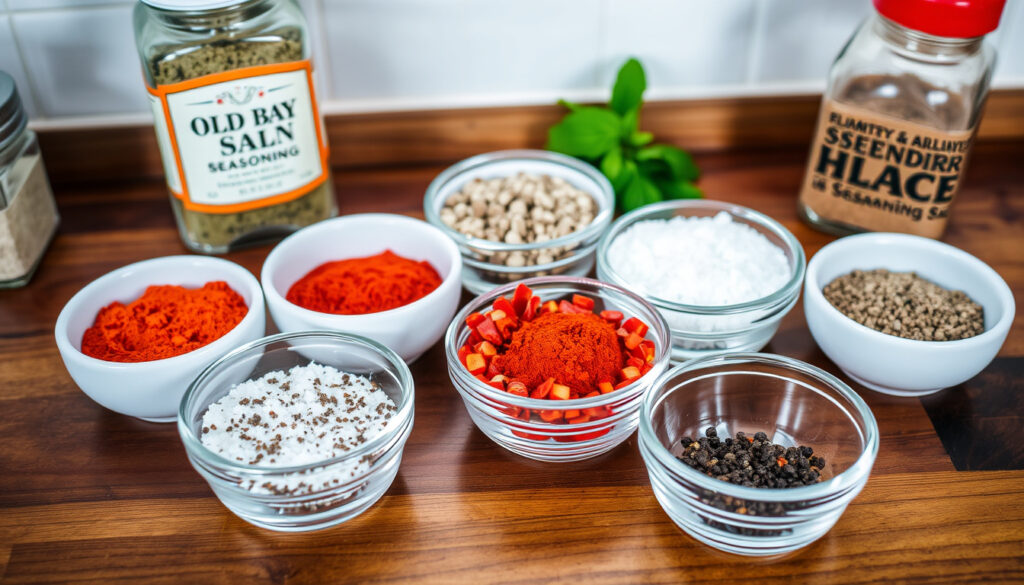
Old Bay Seasoning Recipe: Make It at Home
Anyone who’s ever piled steamed crabs on a newspaper-covered table knows the ritual: a generous dusting of that red-orange seasoning, a cold beer, and a mess of shells. Old Bay Seasoning has been the essential companion to seafood feasts for over eight decades, yet its exact recipe remains a closely guarded secret. This guide lays out a tested copycat blend, compares global substitutes—including options for Australian kitchens—and traces the surprising history of the seasoning.
Year created: 1939 ·
Number of spices in original blend: 18 ·
Origin city: Baltimore, Maryland ·
Founder: Gustav Brunn
Quick snapshot
- Old Bay contains celery salt, paprika, black pepper, cayenne, nutmeg, mace, cinnamon, ginger, and other spices (McCormick, official product page).
- The exact proportions are proprietary and not disclosed (McCormick Old Bay History).
- Exact spice proportions in the original formula (The Daring Gourmet (food blog)).
- Whether the blend has been altered since 1939 (McCormick Old Bay History).
- 1939 – Gustav Brunn creates the blend in Baltimore (McCormick Old Bay History).
- 1990 – McCormick & Company acquires Old Bay (McCormick Old Bay History).
- DIY copycat recipes continue to grow, especially among home cooks wanting to control sodium and spice (The Hangry Woman (recipe blog)).
Five key facts about Old Bay, one pattern: every data point traces back to a single inventor and a single city.
The pattern: a single immigrant’s spice blend became a regional staple, then a national icon, and now a global cult item. The question is whether a home cook can truly replicate it.
| Attribute | Value |
|---|---|
| Creator | Gustav Brunn |
| Year of creation | 1939 |
| Original purpose | Seafood seasoning for Maryland crab houses |
| Current owner | McCormick & Company |
| Key ingredient | Celery salt |
What are the ingredients in Old Bay?
According to McCormick (the brand’s official product page), Old Bay Seasoning contains 18 herbs and spices, but the full list is not made public. Multiple food bloggers have reverse-engineered the blend, and their versions consistently share a core set of spices.
Core spice blend
- Celery salt (the dominant base)
- Paprika (sweet and/or smoked)
- Black pepper
- Cayenne pepper
- Nutmeg
- Mace
- Cinnamon
- Ginger
- Allspice
- Cloves
- Dry mustard
- Red pepper flakes
- Bay leaves (ground)
The Daring Gourmet (food blog) includes all of the above and notes that adding garlic powder and onion powder is optional if you want to boost the count toward 18 (The Daring Gourmet recipe).
Ingredient notes (allergens, dietary)
- Old Bay itself is gluten-free and vegan, though cross-contamination depends on the production facility (McCormick product details).
- Homemade versions are naturally gluten-free and vegan as long as you use certified gluten-free spices.
- The high sodium content comes from celery salt; see the FAQ for salt-free options.
Home cooks can get very close to the real thing with about a dozen common spices. The only catch is that the exact ratios remain proprietary—so your blend will be a personal interpretation, not a perfect clone.
How do you make Old Bay Seasoning?
Making a copycat Old Bay blend at home takes about 10 minutes and requires only a spice grinder or a small food processor. The process is simple enough for beginners.
Step-by-step mixing instructions
- Measure and combine all ground spices in a small bowl (see the recipe table below for quantities).
- Transfer the mixture to a coffee/spice grinder or a small blender and pulse until the consistency is uniform and the bay leaf flakes are finely ground (The Daring Gourmet method).
- Pour the finished blend through a fine-mesh sieve to remove any large bits.
- Transfer to an airtight jar and store in a cool, dark place.
Pulverizing the spices with a grinder unlocks more aroma and ensures the blend clings evenly to food. Skipping this step results in a coarser, less integrated mix that may not stick as well to moist surfaces like shrimp or crab.
Storage and shelf life
Keep the seasoning in an airtight container away from heat and light. The Daring Gourmet recommends using the homemade blend within 3 months for optimal flavor, though it will remain safe to use well beyond that (Sprinkles and Sprouts (cooking blog) suggests 6 months). Label the jar with the date you made it.
Adjusting spice levels to taste
- For less heat: reduce or omit cayenne and red pepper flakes.
- For a sweeter profile: increase cinnamon and nutmeg.
- For lower sodium: replace celery salt with a mix of celery seed and a salt substitute, or reduce overall salt (The Hangry Woman (recipe blog)).
What can I use as a substitute for Old Bay Seasoning?
Several commercial blends come close to Old Bay’s flavor profile, and many can be tweaked at home. The table below compares the most common options.
The pattern: every substitute trades away some complexity for convenience.
| Substitute | Key difference from Old Bay | Best use |
|---|---|---|
| Cajun seasoning | Higher cayenne/heat, often includes onion and garlic powder | Chicken, gumbo, fries |
| Shrimp boil seasoning (e.g., Zatarain’s) | Stronger mustard and dill notes, more sour (citric acid) | Boiled shrimp, crawfish |
| Homemade DIY blend (see recipe above) | Can be tailored to match exactly; may lack the “18 spices” depth | Any dish where Old Bay is called for |
| Lawry’s Seasoned Salt | No celery seed or paprika; heavy on onion and garlic | General seasoning, not seafood-specific |
| Tone’s Seafood Seasoning | Very similar, slightly milder heat | Direct 1:1 swap |
The catch: none of these is an exact replica because Old Bay’s exact formula is trademarked. However, a homemade blend can get within 90% of the real thing, as Leites Culinaria (food blog) notes in its copycat recipe.
What is equivalent to Old Bay Seasoning in Australia?
Finding Old Bay in Australia has long been a challenge, but several options exist—both imported and local.
Australian store brands like Masterfoods
Sprinkles and Sprouts (cooking blog) reports that Masterfoods Seafood Seasoning is the most common Australian equivalent. It has a similar reddish colour and a celery-pepper profile, though it tends to be milder and sweeter.
DIY alternatives using local ingredients
If you can find Australian celery salt (or make it by grinding celery seed with table salt), the same copycat recipe above works perfectly. Sprinkles and Sprouts notes that its author located ground bay leaf from an Australian spice shop, and that USA Foods (specialty importers in Sydney and Melbourne) carries actual Old Bay.
Online availability and import options
- USA Foods (Belmore, Sydney and Melbourne) stocks Old Bay regularly (Sprinkles and Sprouts).
- Amazon Australia carries Old Bay at a premium.
- Some Coles and Woolworths stores list Masterfoods Seafood Seasoning as a local alternative.
The implication: for many Australians, making the blend at home remains the most reliable and cost-effective option.
What is the same as Old Bay?
No commercial product is identical, but a few brands come very close.
Other commercial seafood seasonings
- J.O. Spice: A Baltimore-area competitor, notably used by some crab houses. It lacks the prominent celery note (McCormick Old Bay History provides context on regional rivals).
- Lawry’s Seasoned Salt: Popular but missing the celery and paprika punch.
- Zatarain’s Shrimp & Crab Boil: Heavy on mustard and cayenne, different from Old Bay’s sweeter notes.
Regional brand comparisons
The closest off-the-shelf match in U.S. supermarkets is often Tone’s Seafood Seasoning, which several food bloggers have tested side-by-side. The Kitchn (cooking publication) notes that while the blends are nearly interchangeable in cooked dishes, Tone’s is slightly saltier and less complex on the nose.
The Hangry Woman summarizes: “Old Bay boasts 18 spices, and no other brand is going to hit every single one.”
Timeline: How Old Bay became a cult seasoning
- 1939 – Gustav Brunn, a German immigrant, creates Old Bay in Baltimore. He opens the Baltimore Spice Company and markets the blend to local crab houses (McCormick Old Bay History).
- 1990 – McCormick & Company acquires the brand, expanding distribution nationwide (McCormick Old Bay History).
- 2000s – Old Bay escapes the seafood aisle. Home cooks start using it on chicken, french fries, corn on the cob, and in Bloody Mary mixes.
- 2020 – During pandemic lockdowns, DIY copycat recipes soar in popularity, driven by home cooks who can’t find the original or want to control salt content (The Hangry Woman (recipe blog)).
What this means: Old Bay’s journey from a regional crab seasoning to a global pantry staple is a testament to how one distinctive flavor can transcend its original context.
What we know — and what remains uncertain
Confirmed facts
- Old Bay contains celery salt, paprika, black pepper, cayenne, nutmeg, mace, cinnamon, ginger, allspice, cloves, mustard, red pepper, and bay leaves.
- The original formula is proprietary and not publicly disclosed.
- Store-bought substitutes include Cajun seasoning, seafood boil blends, and Masterfoods Seafood Seasoning (Australia).
What’s unclear
- The exact proportions of each spice in the original blend.
- Whether the recipe has changed under McCormick ownership.
- Long-term health effects of the high sodium content (one teaspoon has about 1500 mg sodium).
Expert voices on the Old Bay phenomenon
“Old Bay Seasoning is a mixture of celery salt, spices, and paprika, and it’s been the go-to seafood seasoning on the East Coast for decades.”
— The Kitchn (cooking publication)
“The combination of celery salt, paprika, black pepper, cayenne pepper, cinnamon, ginger, and nutmeg creates a complex, warm, and slightly spicy flavor that is uniquely Old Bay.”
— Leites Culinaria (food blog)
“You can make this homemade Old Bay seasoning in a coffee grinder or a small blender. Store it in an airtight jar in a cool, dark place, and use it within 3 months for the best flavor.”
— The Daring Gourmet (food blog)
“Old Bay boasts 18 spices. No other brand is going to hit every single one, but you can get close with a homemade blend.”
— The Hangry Woman (recipe blog)
For the home cook or the seasoned professional, the takeaway is the same: Old Bay’s magic is replicable — but only if you respect the balance of celery, sweetness, and heat.
Related reading: Old Bay Seasoning (Copycat Recipe) – The Daring Gourmet · Homemade Old Bay-Style Seasoning – Sprinkles and Sprouts
If you live down under, you can find Old Bay seasoning in New Zealand or simply make your own blend using this copycat recipe.
Frequently asked questions
Is Old Bay seasoning gluten-free?
According to McCormick, the original blend does not contain gluten ingredients, but the facility also processes wheat. Homemade versions are gluten-free if you use certified gluten-free spices.
Can I use Old Bay on steak?
Yes. Old Bay works as a dry rub for steak, especially grilled or pan-seared cuts. The cayenne and paprika create a good crust.
How much sodium is in Old Bay seasoning?
McCormick’s original contains about 1500 mg of sodium per teaspoon, primarily from celery salt. Homemade versions can reduce sodium significantly.
Does Old Bay contain MSG?
No. McCormick does not list MSG in the ingredients. The Hangry Woman copycat also omits it.
Can I make Old Bay without salt?
Yes. Replace celery salt with a combination of celery seed and a salt-free spice blend (or just omit salt and adjust to taste). The flavor will be less pungent.
What is the best way to store Old Bay?
Store in an airtight container in a cool, dark place away from heat and moisture. Homemade blends stay potent for 3–6 months.
Can I use Old Bay in a Bloody Mary?
Absolutely. Old Bay is a classic rimming salt and a popular spice addition to bloody mary mixes. The celery note complements tomato juice perfectly.
Is Old Bay seasoning vegan?
Yes, the original blend contains no animal products. Homemade versions are also vegan.
More related posts
 Parts of the Brain: Anatomy, Functions, and Key Structures
 Cary Grant: Private Struggles Behind the Hollywood Charm
 Tim Tebow: How NFL Failure Redefined Success
 Bettina Anderson: Career, Net Worth, Marriage to Donald Trump Jr.
 Barcelona vs Atlético Madrid: UCL Quarter-Final 2026 Result
 How Many Calories in a Banana? By Size, Sugar & Diet Tips
 CRA 2026 Tax Bracket Changes: New Brackets & Limits
 Mohammed Bin Salman: Wives, Net Worth, Family, and US Relations