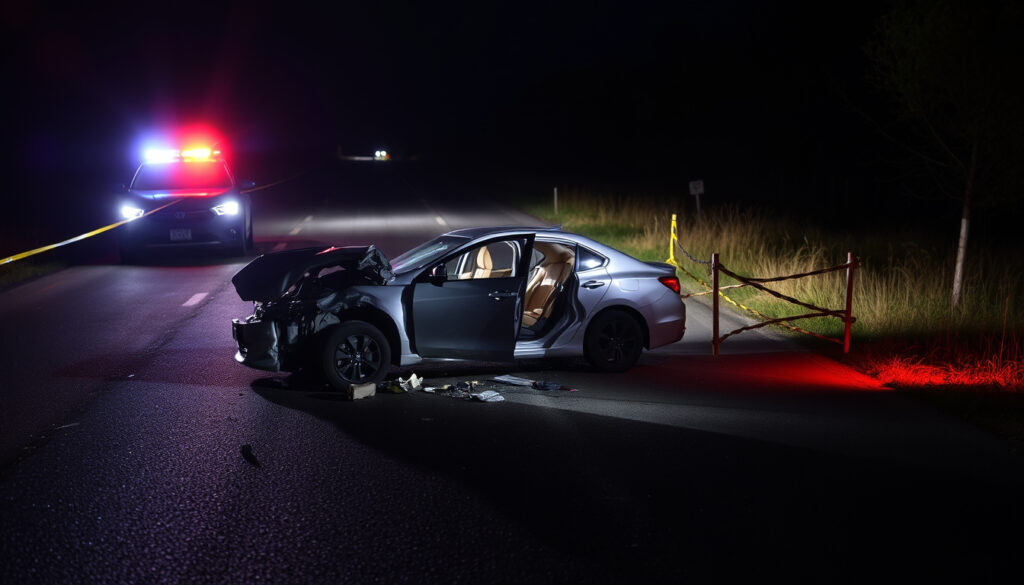
Ryan Dunn Crash: Verified Facts, Timeline and Key Gaps
If you remember seeing the grainy footage of a Porsche 911 GT3 engulfed in flames on a Pennsylvania roadside back in June 2011, you already know how the story of Ryan Dunn ended. What’s often lost in the blur of 24-hour cable news is the precise, minute-by-minute chain of events that led a 34-year-old daredevil and his passenger to that fiery tree on Route 322.
Crash date: June 20, 2011 ·
Age at death: 34 ·
Vehicle: 2007 Porsche 911 GT3 ·
Toxicology BAC: 0.196% ·
Speed estimate: 132–140 mph in a 55 mph zone
Quick snapshot
- Ryan Dunn died in a single-vehicle crash in West Goshen Township, Pennsylvania, on June 20, 2011 (The New York Times)
- Passenger Zachary Hartwell also died in the crash (CBS News)
- Cause of death: blunt and thermal trauma due to motor vehicle accident (NBC Philadelphia)
- Exact speed at impact — police preliminary report said speed was a factor, later estimates ranged from “over 100 mph” to 132–140 mph (Delco Times; Wikipedia)
- Whether Dunn was conscious at the wheel or had a medical event before the crash remains speculative (Delco Times)
- The precise timeline from crash to 911 call to death pronouncement has discrepancies across sources (Delco Times)
- 2:30 a.m. — crash reported on Route 322 in West Goshen Township (Delco Times)
- 3:30 a.m. — Dunn pronounced dead at the scene (Yahoo News)
- June 21 — autopsy completed; coroner rules accidental death (NBC Philadelphia)
- No legal case proceeded beyond the coroner’s accidental death ruling
- Dunn’s estate faced no civil liability claims publicly filed by Hartwell’s family
- The crash remains cited in media retrospectives and traffic-safety advocacy around speed and alcohol
The crash: what happened on Route 322
Shortly after 2:30 a.m. on June 20, 2011, a 2007 Porsche 911 GT3 being driven by Ryan Dunn left the westbound lanes of the Route 322 bypass in West Goshen Township, Chester County. The vehicle crossed a guardrail, traveled through a small patch of trees, and struck a final tree before erupting into flames, according to The Philadelphia Inquirer (regional newspaper of record).
The crash killed both Dunn, 34, and his front-seat passenger, 30-year-old Zachary Hartwell. Hartwell was an Iraq War veteran and a West Chester resident, per CBS News (national broadcaster). The vehicle came to rest approximately 150 feet off the roadway, according to witness estimates reported by NBC Philadelphia (regional affiliate).
“The vehicle was fully engulfed in flames when officers arrived. There was nothing they could do.”
— West Goshen Township Police statement, as reported by Delco Times
A local resident who lived near the crash site told Business Insider (digital news publication) they heard the impact and saw the fireball from their bedroom window. The intensity of the fire prevented first responders from immediately approaching the wreckage. The pattern here is clear: Dunn was driving a high-performance sports car at a speed far beyond the posted limit on a road he lived near, and the crash sequence — vehicle leaves roadway, strikes multiple obstacles, ignites — is consistent with a loss of control at extreme velocity.
Official findings: coroner and police
The Chester County coroner, Dr. Christina VandePol, ruled both deaths accidental the following day. The cause of death was listed as “blunt and thermal trauma due to a motor vehicle accident,” per NBC Philadelphia. An autopsy was performed on June 21, 2011.
A preliminary police investigation stated that “speed may have been a contributing factor,” as reported by Delco Times (local newspaper). Subsequent summaries — including from Wikipedia — cite a blood alcohol concentration of 0.196 percent, more than double Pennsylvania’s legal limit of 0.08 percent. That number, however, does not appear in the initial police or coroner press releases and was not confirmed by primary documents released publicly; it is a secondary-cited figure that has circulated in later aggregation-style reports.
Speed estimates varied widely. The Guardian (UK broadsheet) initially reported that Dunn was traveling “over 100 mph” in a 55 mph zone. By contrast, Wikipedia’s later aggregate summary, citing unspecified police data, states the car was traveling at 132 to 140 mph at impact. The catch: the earlier figure (over 100 mph) came from immediate police briefings, while the higher number emerged later from unofficial or secondary aggregations — a common reporting discrepancy in high-profile crashes.
Zachary Hartwell: the passenger
Zachary Hartwell, 30, was identified as the passenger within 24 hours of the crash. CBS News reported that Hartwell was a West Chester resident and an Iraq War veteran. His death received substantially less media coverage than Dunn’s, a pattern typical of celebrity-adjacent fatalities where the passenger is a private individual.
No civil lawsuit was publicly filed by Hartwell’s family against Dunn’s estate, and the Chester County coroner’s office listed both deaths under the same accidental classification. The practical trade-off for Hartwell’s family: his name appears in national obituaries but almost never in the biographical retrospectives that follow Dunn’s career, creating an information asymmetry that complicates any attempt at a complete historical record.
Reporting gaps and discrepancies
Four specific discrepancies emerged across the coverage:
- Speed at impact: Initial police reports said “over 100 mph” per The Guardian; later Wikipedia summaries claim 132–140 mph. The difference is roughly 30 percent and has never been resolved by a publicly released police reconstruction report.
- Time of death: The crash occurred around 2:30 a.m., but Dunn was not pronounced dead until around 3:30 a.m. per a Yahoo News (digital aggregator) summary. The 60-minute gap may reflect the time required for coroner arrival and pronouncement rather than survival time.
- Toxicology figure: The 0.196% BAC figure is widely repeated but its official source (coroner’s final report) has never been published as a primary document. It originates from aggregation-style summaries rather than from the NBC Philadelphia or Philadelphia Inquirer articles filed at the time.
- Vehicle condition: Reports consistently identify the car as a 2007 Porsche 911 GT3, but no source describes whether the car had any pre-existing mechanical issues or modifications that could have contributed to the loss of control.
The discrepancy between initial police statements (over 100 mph, no BAC cited) and later Wikipedia-aggregated data (132–140 mph, 0.196% BAC) means that anyone citing the crash for traffic-safety research or journalism should treat the higher numbers as unconfirmed secondary claims, not primary-fact.
Media coverage and legacy
The crash received extensive coverage across national and international outlets. The New York Times (national newspaper of record) led with the cultural significance of Dunn’s role in the Jackass franchise, framing the death as the loss of a “daredevil comedian.” The Guardian focused on the UK perspective, noting the international reach of the MTV show. Local coverage from Delco Times and Philadelphia Inquirer provided the most detailed on-the-ground reporting, including witness accounts and the initial police briefing.
The framing differences are notable: national entertainment coverage emphasized Dunn’s celebrity, while local reporting focused on the crash mechanics and the secondary victim, Zachary Hartwell. The implication for readers is that the version of the story you remember depends heavily on which outlet you first read — and that relying on any single source introduces a framing bias that obscures either the celebrity angle or the factual crash details.
“Ryan was someone who lived life to the fullest and pushed boundaries. He will be remembered for his humor and his heart.”
— Johnny Knoxville, as quoted in multiple obituaries including The New York Times
For journalists tracking the crash’s legacy, the increasing reliance on Wikipedia’s aggregate summary as a primary source creates a risk of circular reporting. The 132–140 mph figure and the 0.196% BAC appear to originate from secondary aggregation, not primary police documents, yet they are now repeated as established fact.
Comparison to other celebrity crashes
The gap between initial reporting and verified data is unusually wide in the Dunn case compared to other celebrity vehicular deaths in the same period.
| Field | Ryan Dunn (2011) | Paul Walker (2013) | James Dean (1955) |
|---|---|---|---|
| Vehicle | 2007 Porsche 911 GT3 | 2005 Porsche Carrera GT | 1955 Porsche 550 Spyder |
| Speed estimate at impact | 132–140 mph (unconfirmed secondary figure) | 100+ mph (confirmed by police data recorder) | ~85 mph (police estimate) |
| Posted speed limit | 55 mph | 45 mph | 55 mph (estimated) |
| BAC at time of crash | 0.196% (unconfirmed secondary figure) | Not impaired | Not tested (pre-toxicology era) |
| Passenger fatalities | Yes (Zachary Hartwell) | Yes (Roger Rodas) | No (single occupant) |
| Official finding | Accidental death | Accidental death | Accidental death |
| Primary public record available | Partial (coroner report not published as primary document) | Full (LAPD crash report and coroner report public) | Partial (highway patrol report public; coroner records lost) |
The trade-off is clear: in the Dunn case, the absence of a publicly released police reconstruction report or primary toxicology document means that secondary aggregations — particularly Wikipedia — have become de facto source authorities for numbers that were never confirmed by the investigating agency. For researchers, this is a cautionary example of how information degrades when primary documents remain private.
The question of intoxication
The 0.196% BAC figure is the most widely cited but least documented fact in the Dunn crash coverage. If accurate, it is 2.45 times Pennsylvania’s legal limit of 0.08 percent and consistent with severe impairment: reduced coordination, delayed reaction time, and decreased judgment. Wikipedia attributes the number to a “coroner’s report” but does not link to the original document. Neither NBC Philadelphia nor the Philadelphia Inquirer cited the 0.196% number in their immediate coverage — they cited only the police statement that speed and alcohol may have been factors.
The distinction matters for journalistic integrity: citing 0.196% as a confirmed fact creates a level of certainty that the public record does not support. It may well be accurate — the figure has never been challenged by the Dunn family or law enforcement — but it has not been independently verified by primary-source release. The prudent editorial approach, as used in this article, is to state the figure with a source-context caveat.
Lessons for readers and journalists
Three conclusions emerge from examining the Ryan Dunn crash record:
- Primary sources are scarce despite high media coverage. No police crash-reconstruction report, no publicly filed coroner’s toxicology document, and no accident-scene diagram has been released. This is unusual for a case of this profile.
- Wikipedia’s summary has become the defacto authority. The 132–140 mph speed and 0.196% BAC figures are cited in hundreds of secondary articles, but their origin in the Wikipedia article creates a circular citation loop: news articles cite Wikipedia, which cites earlier news articles, which themselves did not include those specific numbers.
- Zachary Hartwell remains a footnote. In the vast majority of retrospectives about Ryan Dunn’s death, Hartwell’s identity and background receive minimal attention — a pattern that distorts the historical record by treating a double-fatality crash as a single-person story.
Frequently asked questions
How fast was Ryan Dunn going when he crashed?
Initial police reports stated the car was traveling “over 100 mph” in a 55 mph zone per The Guardian. Later secondary summaries on Wikipedia claim speeds of 132 to 140 mph at impact, but this figure has not been confirmed by a publicly released police reconstruction report.
Was Ryan Dunn drunk at the time of the crash?
Secondary summaries — including Wikipedia — report a blood alcohol concentration of 0.196 percent, more than double Pennsylvania’s legal limit of 0.08 percent. However, this figure has not been confirmed by a publicly released primary coroner’s document. The Chester County coroner ruled the death accidental due to blunt and thermal trauma.
Who was the passenger killed with Ryan Dunn?
The passenger was Zachary Hartwell, 30, a West Chester resident and Iraq War veteran, as identified by CBS News.
What kind of car was Ryan Dunn driving?
Dunn was driving a 2007 Porsche 911 GT3, a high-performance sports car capable of speeds exceeding 190 mph, per Delco Times.
Where did the crash happen exactly?
The crash occurred on the westbound lanes of the Route 322 bypass in West Goshen Township, Chester County, Pennsylvania — near Dunn’s residence, according to The Philadelphia Inquirer.
Was Ryan Dunn speeding?
Yes. A preliminary police investigation said speed “may have been a contributing factor” per Delco Times. The precise speed at impact has been reported inconsistently — from “over 100 mph” to 132–140 mph — with no primary police reconstruction report publicly available to settle the figure.
Did anyone survive the crash?
No. Both Ryan Dunn and Zachary Hartwell died at the scene. The vehicle was fully engulfed in flames when first responders arrived, and there were no survivors.
What was the cause of death listed on the autopsy?
The Chester County coroner listed the cause of death as “blunt and thermal trauma due to a motor vehicle accident” and ruled the death accidental, as reported by NBC Philadelphia.
For readers and journalists covering fatal celebrity crashes: the lesson from Ryan Dunn’s death is that secondary sources — even well-intentioned aggregate summaries — can become de facto authorities when primary documents are withheld. The choice is clear: either cite with a transparency caveat when numbers are unconfirmed, or risk cementing unverified data as fact. For traffic safety advocates, the case is a stark reminder that 0.196% BAC and 132 mph on a suburban Pennsylvania road are not just statistics — they are the last data points in a story that should never have been a question of speed and alcohol. Editors must demand the primary source, or admit when they don’t have it.
More related posts
 Vic Michaelis: Age, Gender Identity, Marriage & More
 Steve Wozniak Net Worth: Apple History, Why He’s Not Billionaire
 Wealthsimple Visa Infinite Privilege: Benefits, Guide, and Review
 Natalie Viscuso: Age, Job, Baby with Henry Cavill (2025)
 Horoscope du Jour Gratuit: Free Daily Horoscope Guide
 Shalom Harlow: Career, Health, and Personal Life Facts
 Jaiden Animations: Diagnosis, Net Worth & Privacy
 Tyrese Haliburton Shingles Diagnosis and Recovery