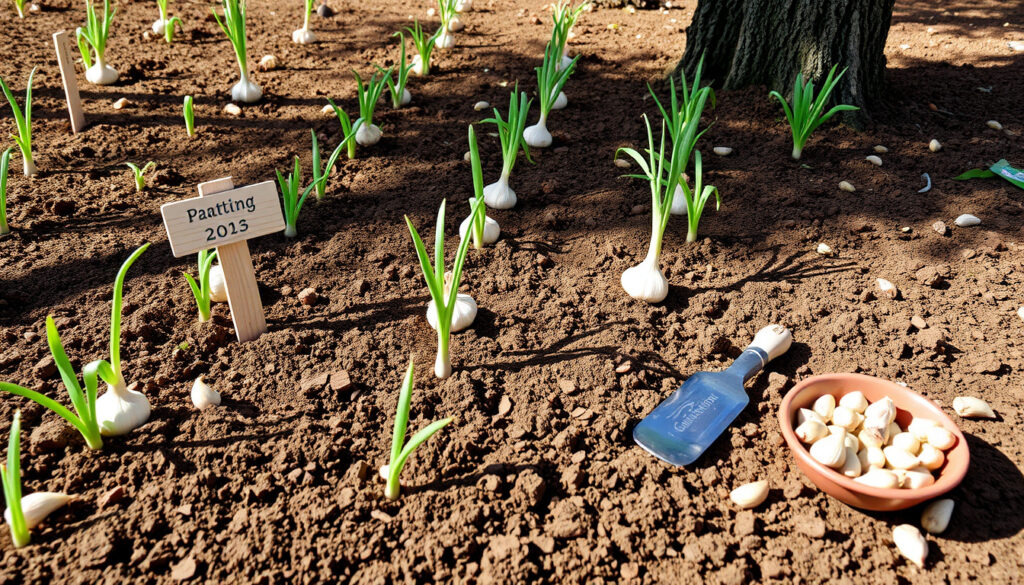
How to Plant Garlic: Best Tips for Soil, Timing, and Mistakes
There’s a quiet satisfaction in pushing a garlic clove into the soil in autumn and digging up a full bulb the next summer, but a little planning separates a bumper crop from a handful of tiny cloves — and most mistakes happen before the clove ever touches the ground. This guide walks through the essentials: when and how deep to plant, which varieties work best, and the errors that even experienced gardeners make.
- Select certified disease-free seed garlic — hardneck for cold winters, softneck for mild climates.
- Prepare soil with 2–3 inches of compost or well-rotted manure in a full-sun, well-drained site.
- Separate cloves from the bulb immediately before planting, leaving papery skin on.
- Plant each clove pointy end up, 2 inches deep and 6 inches apart in rows 12 inches apart.
- Mulch heavily (4–6 inches of straw) after planting for winter protection, then water sparingly until spring.
Recommended planting depth: 2 inches (5 cm) ·
Days to harvest: 240 (fall-planted) to 180 (spring-planted) ·
Ideal soil pH: 6.0–7.0 ·
Optimal spacing between cloves: 6 inches (15 cm) ·
Best planting time (northern hemisphere): October–December (autumn) or February–March (spring)
Quick snapshot
- Plant cloves pointy end up for straight growth (Mind & Soil (gardening blog))
- Use certified disease-free seed garlic for best results (Fine Gardening (horticulture magazine))
- Garlic needs well-drained soil and full sun (Midwest Garden Gal (regional gardening blog))
- Optimal spacing may vary by variety (some recommend 4–8 inches) (Fine Gardening (horticulture magazine))
- Effectiveness of fall vs spring planting in very mild climates is debated among growers (The Art of Doing Stuff (lifestyle blog) cites regional variation)
- Depth may need adjustment for heavy clay soils (Mind & Soil (gardening blog) suggests 4 inches for winter insulation)
- October–December: plant autumn garlic (The Art of Doing Stuff (lifestyle blog))
- June–July: harvest when lower leaves brown (Fine Gardening (horticulture magazine))
- Cure harvested garlic for 2–3 weeks in dry shade (Grow a Good Life (gardening blog))
- Store in a cool, dark place with good air circulation (Grow a Good Life (gardening blog))
Six key facts, one pattern: garlic success hinges on depth, spacing, and timing — with regional adjustments for climate.
| Fact | Value |
|---|---|
| Best planting time | Autumn (October–December) or early spring (February–March) |
| Planting depth | 2 inches (5 cm) |
| Spacing | 6 inches apart, rows 12 inches apart |
| Sun requirement | Full sun (6–8 hours daily) |
| Soil pH | 6.0–7.0 |
| Days to harvest | 240 (fall plant) / 180 (spring plant) |
The implication: these are reference points, but soil quality and local frost dates will fine-tune the numbers.
What is the best way to plant garlic?
Choosing the right garlic variety
- Hardneck types (e.g., ‘Chesnok Red’) are cold-hardy and produce large cloves; softneck varieties store longer and suit mild climates (Ripe and Roasted (gardening blog)).
- Always source certified nematode-free bulbs from a reputable seed supplier to avoid soil-borne diseases (Fine Gardening (horticulture magazine)).
Choosing the wrong variety for your climate is the single most common reason for disappointing yields. Hardneck for cold winters, softneck for mild — get that right first.
Preparing the soil
- Work in 2–3 inches of compost or well-rotted manure to create loose, fertile soil (Fine Gardening (horticulture magazine)).
- Avoid planting in the same spot consecutively — rotate every 2–3 years to prevent disease buildup (Fine Gardening (horticulture magazine)).
- Ensure full sun (6–8 hours daily) and good drainage; raised beds help in heavy clay (Midwest Garden Gal (regional gardening blog)).
Planting depth and spacing
- Separate the bulb into individual cloves right before planting; leave the papery skin on.
- Set each clove pointy end up, 2 inches deep (measured from the tip to the soil surface) (Fine Gardening (horticulture magazine)).
- Space cloves 6 inches apart in rows 12 inches apart to give roots room to expand (Mind & Soil (gardening blog)).
What this means: the depth rule is one of the few constants — 2 inches works across hardneck and softneck varieties, in heavy and light soils alike.
How to plant and grow your own garlic starting this fall?
Fall planting timeline
- For most northern regions, plant from late September through November — ideally 4–6 weeks before the ground freezes (The Art of Doing Stuff (lifestyle blog)).
- Fall planting gives garlic a long growing season and larger bulbs the following summer.
Winter care and mulching
- After planting, cover the bed with 4–6 inches of straw or shredded leaves for insulation (Midwest Garden Gal (regional gardening blog)).
- Water sparingly during winter dormancy — only if the soil is very dry.
Spring growth and summer harvest
- Remove most mulch after the last frost so soil can warm up.
- Fertilize in mid-spring with a balanced organic fertilizer or liquid kelp/fish emulsion (Fine Gardening (horticulture magazine)).
- Stop watering about 2 weeks before harvest, which typically falls in early to mid-summer when the lower leaves turn brown (Fine Gardening (horticulture magazine)).
The pattern: timing and mulching are critical for fall-planted garlic to survive winter and produce large bulbs.
What is the mistake when planting garlic?
Planting too shallow or too deep
- Cloves set less than 1 inch deep risk frost heave and poor rooting; deeper than 3 inches delays emergence and reduces bulb size (Mind & Soil (gardening blog)).
- The sweet spot is 2 inches — consistent across most guides.
Using supermarket garlic
- Grocery store bulbs are often treated with sprout inhibitors and may carry fungal diseases (Fine Gardening (horticulture magazine)).
- Even untreated supermarket garlic is rarely adapted to your local climate, leading to poor yields.
Poor drainage and overwatering
- Garlic rots in waterlogged soil — raised beds or compost-amended rows are essential in clay-heavy gardens (Ripe and Roasted (gardening blog)).
- After spring growth, water only when the top 2 inches of soil feel dry.
Each of these mistakes compounds. Too shallow + supermarket garlic + wet soil = near-certain failure. Fixing just the depth and drainage can salvage a crop even with less ideal seed.
The implication: avoiding these three errors dramatically improves success rates.
Can I grow garlic from my garlic?
Using grocery store garlic
- You can, but success is hit-or-miss. Opt for organic bulbs from local farmers if possible — they’re less likely to be treated (Fine Gardening (horticulture magazine)).
- Disease risk is higher with supermarket stock; expect a lower yield than certified seed garlic.
When to plant sprouted cloves
- If a clove has already sprouted in your kitchen, plant it immediately — the sprout will continue growing (Grow a Good Life (gardening blog)).
- No need to remove the sprout; it’s the plant’s growing point.
Success rate and tips
- For highest reliability, buy certified seed garlic from a nursery or online supplier.
- If using grocery garlic, choose the largest cloves — small cloves produce tiny bulbs (Midwest Garden Gal (regional gardening blog)).
What this means: grocery garlic can work, but certified seed garlic offers predictability and higher yields.
How to grow garlic in Ireland?
Best garlic varieties for Ireland
- Hardneck varieties such as ‘Chesnok Red’ and ‘Purple Stripe’ perform well in Ireland’s cool, maritime climate.
- Softneck varieties can succeed in milder coastal areas but may produce smaller bulbs.
Planting dates for Irish climate
- Plant autumn garlic from late October to mid-December; spring planting is possible in February–March (Ripe and Roasted (gardening blog)).
- The longer the growing season (autumn planting), the larger the bulbs at harvest.
Soil preparation in cool, wet conditions
- Raised beds are ideal for drainage — incorporate well-rotted manure or compost before planting.
- Heavy winter rains mean extra attention to drainage; consider covering beds with fleece during prolonged wet spells.
Garlic planting timeline
- October–December: Plant autumn garlic; prepare soil with compost (The Art of Doing Stuff (lifestyle blog))
- December–February: Mulch heavily to protect from frost; minimal watering
- March–May: Remove mulch after last frost; water and fertilize monthly (Fine Gardening (horticulture magazine))
- June–July: Harvest when lower leaves brown; stop watering 2 weeks before
- July–August: Cure garlic in dry shade; store for winter use (Grow a Good Life (gardening blog))
Garlic clarity check
Confirmed facts
- Plant cloves pointy end up for straight growth (Mind & Soil (gardening blog))
- Use certified disease-free seed garlic (Fine Gardening (horticulture magazine))
- Garlic needs well-drained soil and full sun (Midwest Garden Gal (regional gardening blog))
- Harvest when lower leaves turn brown (Fine Gardening (horticulture magazine))
What’s still debated
- Optimal spacing may vary by variety (4–8 inches) (Fine Gardening (horticulture magazine))
- Fall vs spring planting outcomes in very mild climates are not fully settled
What gardeners say
“Prepare loose, fertile soil with 2–3 inches of organic matter like compost and manure before planting.”
Fine Gardening (horticulture magazine)
“Plant garlic cloves pointed end up and flat/root end down to ensure proper root and shoot development.”
Mind & Soil (gardening blog)
Two distinct voices — one from a magazine, one from a blog — agree on the same fundamentals. When the advice converges, you can trust it.
The evidence is consistent: depth, drainage, and disease-free seed are the three pillars. Ignore any one and the whole crop suffers. For home gardeners in Ireland or anywhere with a cool, wet climate, the choice is clear: invest in raised beds, plant in autumn, and mulch generously — or accept smaller bulbs and higher rot risk. Skip the supermarket garlic, measure that 2-inch depth, and your first harvest will be the one that hooks you for life.
Once your garlic is planted and growing, knowing when to harvest garlic ensures you don’t miss the optimal moment for a bountiful crop.
Frequently asked questions
How deep should I plant garlic cloves?
2 inches (5 cm) from the tip of the clove to the soil surface. Deeper delays emergence, shallower risks frost heave.
Do I need to peel garlic before planting?
No. Leave the papery skin intact — it protects the clove. Only separate the cloves from the bulb just before planting.
Can I plant garlic from the grocery store?
Yes, but results vary. Supermarket garlic may be treated with sprout inhibitors or carry diseases. Organic, locally grown bulbs give better odds.
How often should I water garlic?
Water deeply once a week during spring growth. Stop watering completely about 2 weeks before harvest to avoid rot.
When is garlic ready to harvest?
When the lower leaves turn brown but the upper leaves are still green — typically June–July for fall-planted garlic.
Should I cut the scapes off garlic?
Yes, hardneck varieties produce scapes (flower stalks). Cut them off in early summer so the plant channels energy into the bulb, not the flower.
Can I grow garlic in a container?
Yes, use a pot at least 8 inches deep with drainage holes. Plant cloves 2 inches deep, 4–6 inches apart, and place in full sun.
More related posts
 Judy Garland’s Death: Debt, Hepatitis, and Liza Minnelli
 Happy Gilmore 2 Release Date, Cast, and Sequel Updates
 Rosanna Arquette: Career, Family, and the Story Behind Toto’s ‘Rosanna’
 How Many Calories in a Banana? By Size, Sugar & Diet Tips
 Elvis Presley: Death, Family, and Intimate Life Answers
 What Is Vodka Made From? Ingredients, Grains, Potatoes & Health
 Panthers vs Maple Leafs – Panthers Win Series 4-3
 Sara Arjun: Age, Father, Movies, Ranveer Singh Age Gap